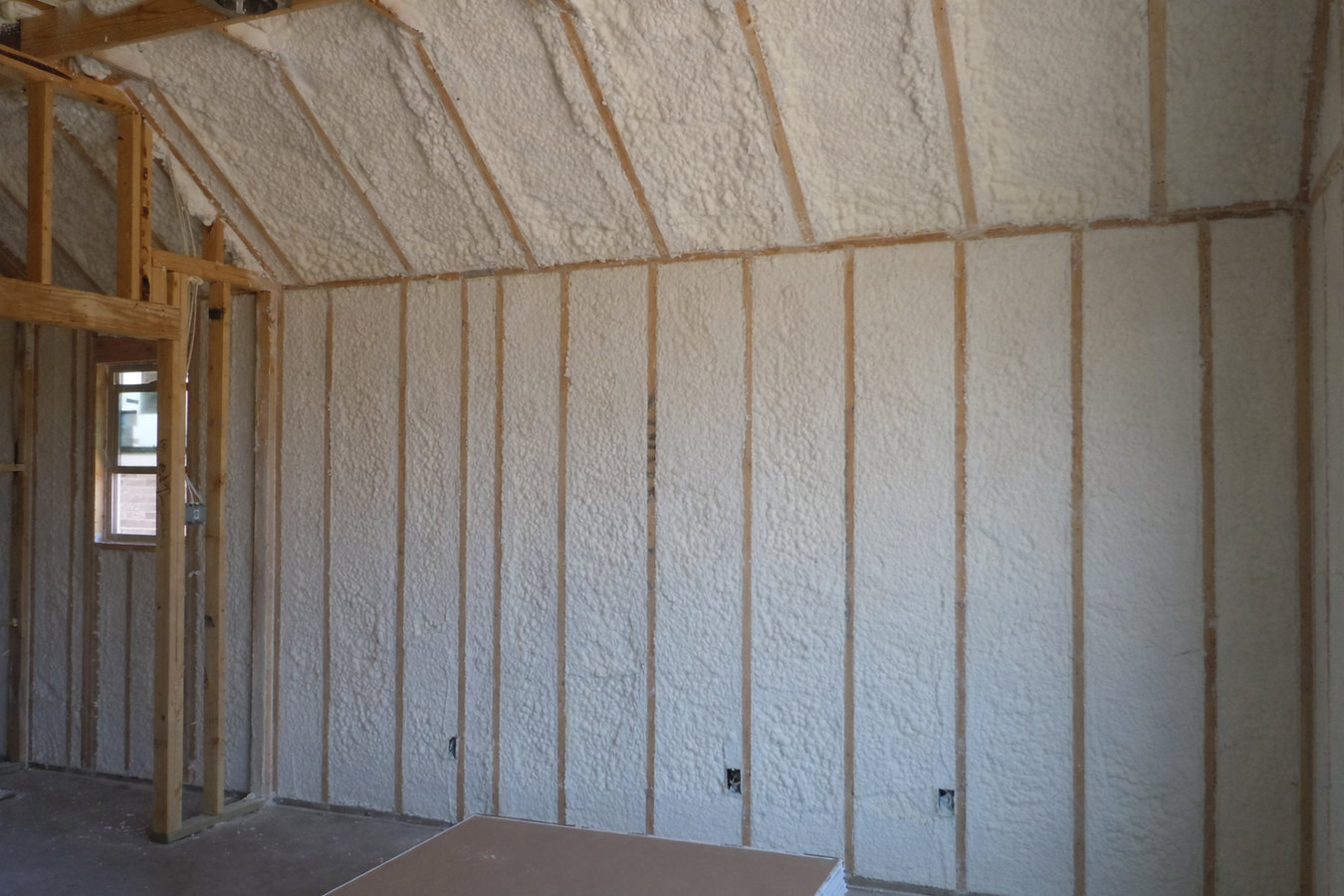
Watsonville homes deal with coastal humidity year-round. Closed-cell foam insulates, seals air, and blocks moisture in one application - the most complete solution for crawl spaces and older walls.
Closed-cell foam insulation in Watsonville, CA is sprayed on as a liquid that expands and hardens into a rigid, seamless layer - most residential crawl space and attic jobs are completed in a single day, with the space ready to use within 24 hours of the final spray.
Most insulation types slow the movement of heat. Closed-cell foam does that, but it also seals air and blocks moisture vapor at the same time - all in a single application. That combination is what makes it the right choice for Watsonville homes, where coastal humidity from Monterey Bay is present year-round. Fiberglass batts and open-cell foam let moisture vapor pass through. In a crawl space or older wall cavity in this climate, that moisture leads to wood rot, mold, and pest problems that compound over time. Closed-cell foam stops that cycle at the source.
It also delivers the highest insulating value per inch of any commonly available material, which matters in tight spaces like low crawl spaces or wall cavities with limited room. For homes where spray foam is the right fit in multiple areas, our spray foam insulation service covers both closed-cell and open-cell applications across the full home.
If you can feel a chill near baseboards, around electrical outlets on exterior walls, or in corners of rooms during Watsonville's foggy mornings, air is getting in through gaps in your building envelope. The damp coastal air that seeps in does not just make rooms feel cold - it makes them feel clammy. Closed-cell foam seals those gaps in a way that other insulation types cannot.
Watsonville's high ambient humidity means crawl spaces that are not properly sealed tend to accumulate moisture over time. If you have noticed a musty smell coming up through your floors, seen condensation on pipes under the house, or had a pest inspector mention standing water or damp soil, your crawl space is a likely candidate for closed-cell foam.
If your heating or cooling costs seem high compared to how much you actually run those systems, poor insulation is one of the most common causes. This is especially true in older Watsonville homes built before the 1980s, which were often constructed with minimal wall and floor insulation by today's standards. Closed-cell foam can address wall cavities and rim joists that other insulation methods cannot reach effectively.
If you have been under your house and noticed gaps where pipes or wires enter, areas where the original insulation has fallen away, or places where you can see light from outside, those are direct pathways for air, moisture, and pests. Closed-cell foam fills and seals those gaps in a single pass - and once cured, it does not sag or fall out the way fiberglass batts often do in crawl spaces.
We install closed-cell foam in the spaces where its combination of insulation, air sealing, and moisture blocking provides the most value: crawl spaces, basement walls and rim joists, and wall cavities in homes where moisture has historically been a problem. In crawl spaces, we typically spray the walls and rim joists to create a fully conditioned space that stays dry and at a stable temperature year-round - a more effective approach than insulating the floor above in Watsonville's damp climate. For homes where we are also addressing the attic or walls, we can include open-cell foam in spaces where the higher density of closed-cell is not needed, keeping the overall project cost in check while still delivering a complete air seal.
Before any foam is sprayed, we check for moisture conditions and assess the space for access challenges. Foam applied over a wet surface will not bond correctly and the job will need to be redone - we verify conditions first so that does not happen. The crew covers any surfaces they do not want sprayed, the mixing equipment stays outside on the truck, and re-entry timelines are provided before work begins, not after.
The most common application in Watsonville - seals the crawl space from coastal humidity and creates a dry, stable environment under the floor.
For homeowners with moisture-prone basement walls - foam blocks vapor and insulates in a single application.
For existing walls in older homes where adding insulation without opening the wall is a priority.
For homes with finished attic space or complex roof lines where creating a tight thermal envelope is the goal.
For homeowners looking to condition a garage space or reduce temperature transfer from an attached garage into living areas.
Crawl space walls, rim joists, and any subfloor penetrations sealed in one coordinated project.
Watsonville sits at the northern edge of Monterey Bay, and the marine layer that rolls in from the coast keeps humidity levels elevated for much of the year. That persistent moisture is the single biggest reason closed-cell foam outperforms other insulation options here - it resists water vapor in a way that fiberglass or open-cell foam cannot match. Watsonville temperatures can also swing 20 to 30 degrees between a foggy morning and a sunny afternoon, and homes without a tight air seal tend to feel drafty and inconsistent regardless of how much insulation is present. Closed-cell foam addresses both the temperature swings and the moisture in a single application. Much of Watsonville's housing was built in neighborhoods like Beach Flats and downtown before modern insulation standards existed, which means many homes here are starting from a low baseline - and the improvement from a proper closed-cell foam installation in those spaces can be dramatic.
Agricultural activity in the surrounding Pajaro Valley also pushes particulates and dust into the air during harvest season. Homes with gaps in the building envelope draw that outdoor air in continuously - sealing those gaps with closed-cell foam is one of the most effective ways to reduce how much of what is outside ends up inside your home. We work throughout Watsonville and serve homeowners in Scotts Valley and Santa Cruz, where the same coastal moisture and older housing stock create identical conditions.
The U.S. Environmental Protection Agency publishes guidance on spray polyurethane foam installation and re-entry timelines. We follow current EPA recommendations on every job and provide you with re-entry timing before work begins.
We ask about your home, where you want insulation installed, and any moisture or energy concerns you have noticed. We respond within 1 business day and schedule an in-person assessment - closed-cell foam pricing depends on the actual square footage and access conditions, so we do not quote jobs without seeing the space first.
We inspect the crawl space, attic, or wall areas, check for moisture conditions and access challenges, and review any existing insulation. After the visit, you receive a written estimate breaking down area covered, foam thickness, and total cost - so you know what you are agreeing to before any work is scheduled.
Before the crew arrives, clear access to the crawl space hatch or work area and move stored items away from the space. The mixing equipment stays outside on the truck. The crew covers surfaces they do not want foam on, then sprays the prepared surfaces in a consistent layer. Most residential crawl space jobs are done in a few hours.
The space is ventilated during and after the job. We give you a specific re-entry time - typically 24 hours after the last spray - before work begins. Before leaving, we walk you through the finished work so you can see coverage and confirm there are no visible gaps or thin spots.
Free written estimate after an in-person assessment. We check moisture conditions before recommending any materials. Responds within 1 business day.
(831) 666-1150We install closed-cell foam in Watsonville and 11 surrounding communities across the Central Coast, from Santa Cruz to San Jose. Contractors who work specifically in coastal California understand how persistent marine humidity affects crawl spaces and older walls differently than inland conditions - that shapes every recommendation we make.
Foam applied over a wet surface will not bond correctly and the installation will fail. We check for moisture conditions during the assessment and tell you honestly if anything needs to be addressed first - even if that delays the project. A foam installation done right the first time lasts the lifetime of the building.
We follow current EPA guidance on spray polyurethane foam re-entry timing and ventilation requirements, and we provide you with a specific re-entry time before work begins. This is a basic safety step that some contractors skip - we do not. You will know exactly when it is safe to return before the crew starts.
Every job we do comes with a written scope of work, material specifications, and total cost before any foam is sprayed. The number you approve is the number you pay, and nothing is added to the invoice after you sign.
Closed-cell foam is one of the highest-cost insulation options per square foot, and it is worth doing right the first time. Every job we do starts with a real moisture assessment and ends with a final walkthrough so you can see exactly what was installed. That approach is why homeowners across the Pajaro Valley call us back for additional work and refer their neighbors.
For authoritative guidance on spray foam insulation standards and contractor qualifications, the Spray Polyurethane Foam Alliance and the California Energy Commission both publish resources for homeowners evaluating their options.
Open-cell foam is a softer, lower-density alternative suited to interior walls and spaces where moisture resistance is less of a priority.
Learn moreLearn about both types of spray foam insulation and how they compare for different spaces and budgets in Watsonville homes.
Learn moreWatsonville's foggy season is year-round - the longer your crawl space or walls go unsealed, the more moisture damage accumulates. Call or fill out the form and we will respond within 1 business day.