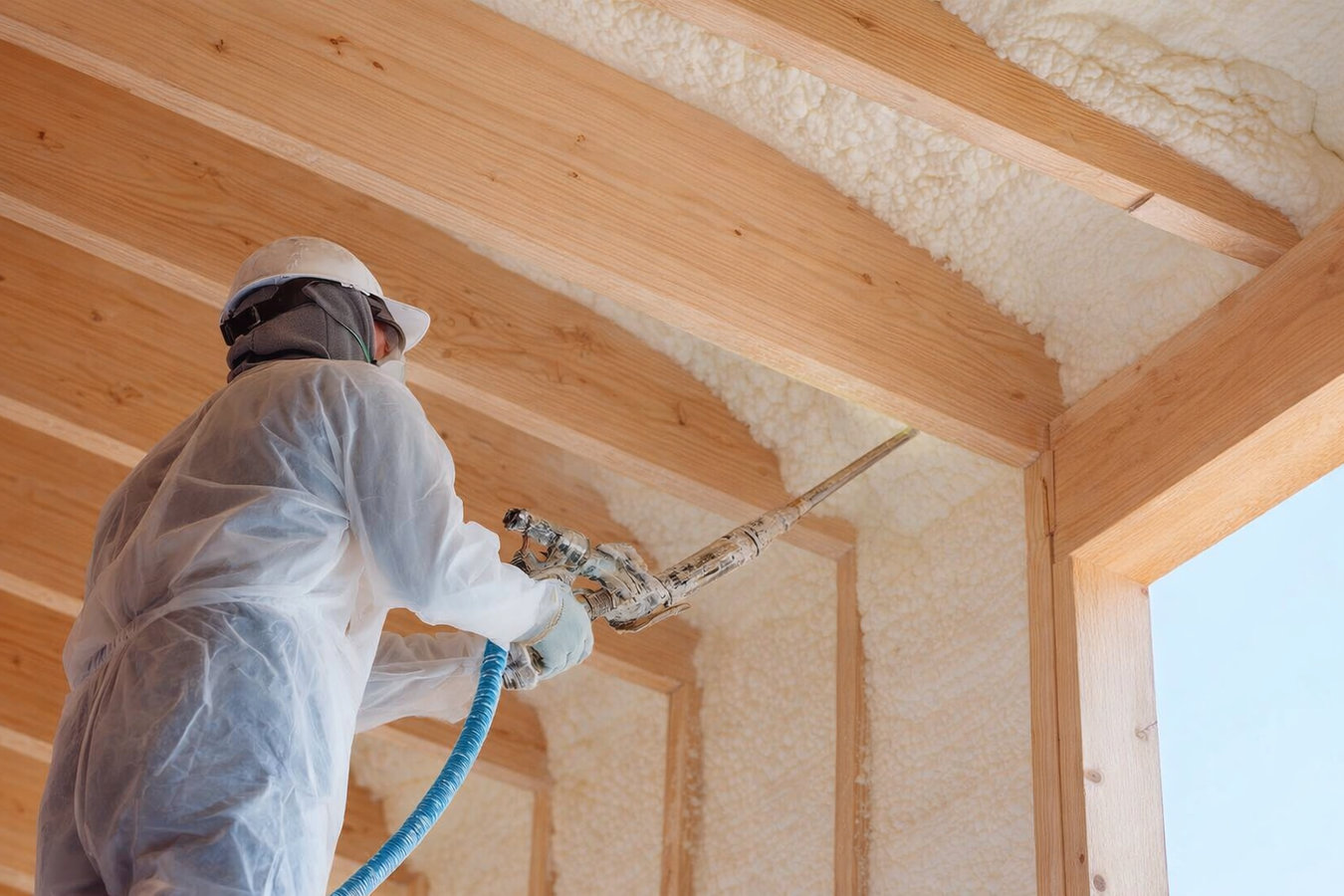
Watsonville homes lose heat and comfort through gaps that standard insulation misses. Spray foam seals those gaps completely - attics, crawl spaces, walls - so your home stays warm in winter and your energy bills reflect what you actually use.
Spray foam insulation in Watsonville, CA fills gaps, creates an air barrier, and resists coastal moisture - most residential jobs covering an attic or crawl space are completed in one to two days.
Watsonville sits just a few miles from Monterey Bay, which means cool, damp air pushes into homes year-round. Traditional insulation slows heat transfer but leaves gaps around wires, pipes, and framing. Spray foam expands on contact and seals those gaps completely, acting as both insulation and an air barrier in one application. If your home was built before the 1980s - which covers a large share of Watsonville homes - there is a good chance the walls and crawl space have little protection against the marine air that rolls in every night.
For homes with attic coverage that has settled or compressed over the decades, pairing spray foam with a full attic insulation assessment gives you a complete picture of where your home is losing energy and comfort.
If floors feel cold from October through March - especially over a crawl space - cool air is moving up from below. In Watsonville, many homes have raised foundations and uninsulated crawl spaces exposed to damp ground air. Spray foam seals that pathway and most homeowners notice a difference within the first heating season.
If your heater runs all the time but certain rooms never quite warm up, air is escaping faster than your system can replace it. This is common in Watsonville homes built before the 1980s, where gaps around old windows, pipes, and framing let the cool marine air in continuously. More heat is not the answer - sealing the gaps is.
Hold your hand near an electrical outlet on an exterior wall on a cool day. If you feel a draft, your wall cavity is connected to outside air. The same test works near baseboards and attic access panels. These are direct signs that your home has air leakage that insulation alone will not fix.
In Watsonville's coastal climate, moisture that enters wall cavities or the crawl space can cause condensation on interior surfaces and create conditions where mold can grow. A musty smell from vents or a closet on an exterior wall is worth investigating - closed-cell spray foam's moisture resistance makes it one of the better long-term solutions for homes in this environment.
We install both open-cell and closed-cell spray foam, recommending the right type based on where it is going and what problem you are solving. For Watsonville crawl spaces, exterior walls, and rooflines, closed-cell foam insulation is usually the better choice because it resists moisture and does not absorb humidity the way softer materials can. For interior walls where sound dampening is a priority and moisture is not a concern, open-cell foam provides better acoustic performance at a lower cost per square foot.
Beyond new installations, we handle retrofit work on older homes - applying foam in tight, irregular spaces that fiberglass batts cannot fill. We also combine spray foam with air sealing work as part of a complete thermal envelope approach. Every job starts with an on-site assessment so we can recommend the right scope for your home before any work begins.
Best for interior walls and sound control in conditioned spaces.
Best for crawl spaces, exterior walls, and moisture-exposed areas in coastal climates.
Ideal for creating an unvented attic with a continuous air barrier above the living space.
Seals the floor deck or crawl space walls to stop cold air and ground moisture from entering the home.
Applied in existing walls through small access points - no full wall teardown required.
Targets specific penetrations, rim joists, and transitions that other materials cannot reach.
Watsonville sits in the Pajaro Valley a few miles from Monterey Bay, and the coastal marine climate is hard on older insulation materials. Persistent fog and damp air work their way into homes that have gaps or thin coverage, making rooms feel cold and clammy even when the thermostat reads 65 degrees. Closed-cell spray foam resists moisture in a way that fiberglass simply cannot - it does not absorb humidity and does not degrade in a damp environment. That matters here in a way it would not in a dry inland city.
A large share of Watsonville homes were built before 1980, which means many have little or no insulation in the walls and thin, compressed coverage in the attic. We serve homeowners throughout the area, including in Santa Cruz and Capitola, where coastal conditions create the same moisture and comfort challenges. California also requires permitted insulation work to meet minimum energy code standards - we are familiar with those requirements and pull the permit for you.
For more on California energy requirements for residential insulation, see the California Energy Commission building standards.
We ask about your home, the areas of concern, and any comfort problems you have noticed. We respond within 1 business day and schedule an on-site visit before quoting anything - no ballpark figures over the phone.
We inspect the attic, crawl space, or walls in person and assess existing insulation, moisture conditions, and access. You receive a written estimate that breaks down costs by area - not a single number - so you know exactly what you are paying for.
For most spray foam jobs in Watsonville, we handle the permit application with the City Building Division. This adds a few days to the timeline but protects you with a documented inspection when the work is complete.
Plan to be out of the home for at least 24 hours after installation. Once the foam cures, we schedule the city inspection, walk you through the finished work, and leave you with a copy of the permit record.
We respond within 1 business day. There is no obligation to proceed after your estimate. After you submit this form, someone from our office will call to schedule a free on-site visit where we assess your home and walk you through our recommendation before any work begins.
(831) 666-1150Every spray foam project that requires a permit is inspected by the City of Watsonville before we consider it finished. That independent inspection gives you documented proof the work meets the required standards - worth keeping if you ever sell your home.
Spray foam is unforgiving if it is mixed or applied wrong, so it should be done by people who do it often. Our crews spray foam in the same marine conditions your home faces, which means proper moisture prep and clean, even coverage every time.
You will never get a surprise bill from us. We provide a written estimate after seeing your home in person, broken down by area and material. The number you approve is the number you pay. For more on industry standards, see the Spray Polyurethane Foam Alliance at sprayfoam.org.
We work throughout Watsonville and the surrounding Santa Cruz County and South Bay area. We know the housing stock here - the older wood-frame homes near downtown, the raised foundations common in the Pajaro Valley - and we know what each type of home needs.
Spray foam is a significant investment, and you deserve a contractor who pulls permits, provides written estimates, and stands behind the work with a documented inspection. That is what we do on every project, from a single crawl space to a full-home retrofit.
Spray foam pairs well with a full attic insulation assessment to ensure your entire thermal envelope is addressed in one visit.
Learn moreLearn more about closed-cell foam specifically - the denser, moisture-resistant option best suited to coastal California conditions.
Learn moreWatsonville homes lose heat and comfort every day through gaps that standard insulation cannot seal - call now and we will assess your home within the week.